The Lost Ritual of 3am Coffee at the Local Diner
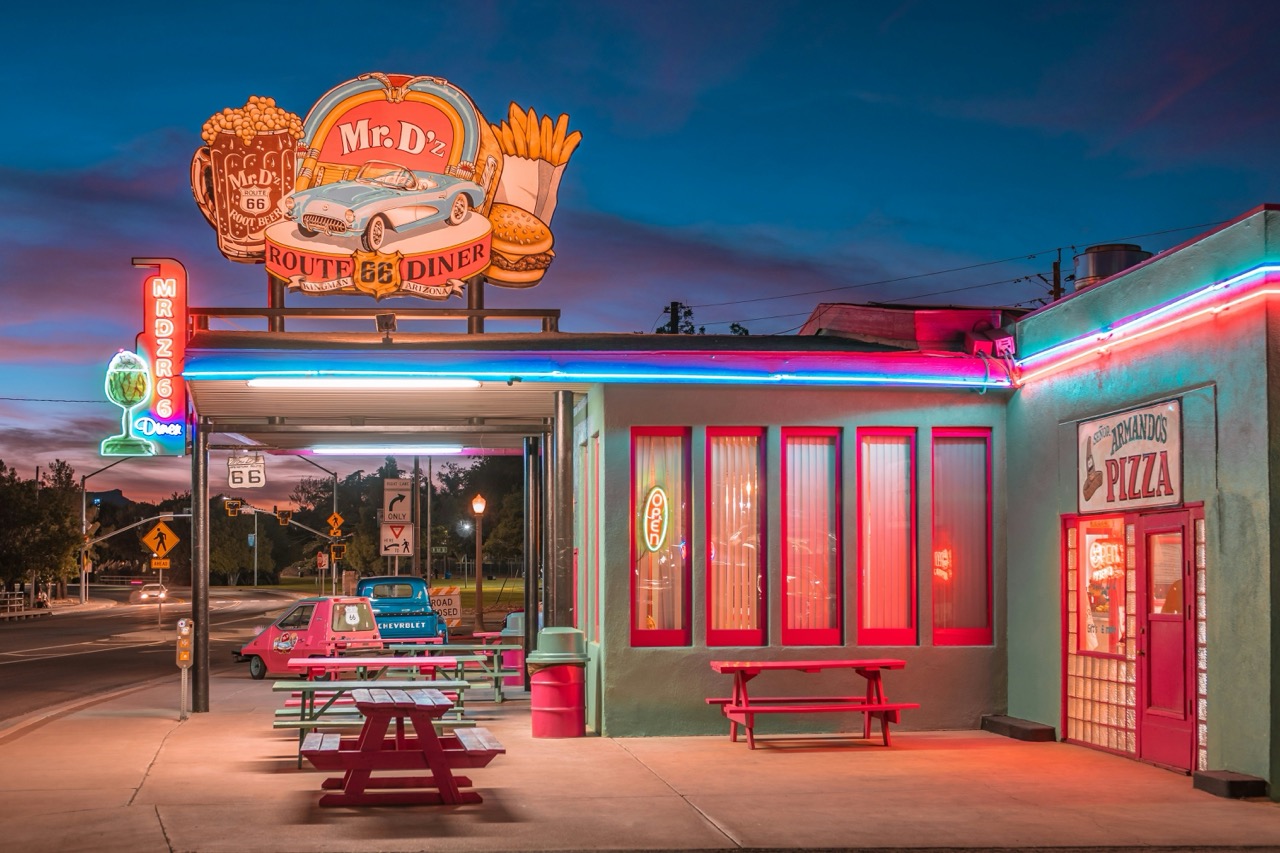
There was a specific kind of magic to the 24-hour diner at 3am. Fluorescent lights buzzing overhead, a bottomless cup of coffee that never seemed to actually run out, and a waitress who’d seen it all and tipped accordingly when you left her a little extra for putting up with you. For an entire generation that came of age in the 90s and early 2000s, this wasn’t a special occasion. It was just Tuesday.
Every Region Had Its Spot
Ask people where they used to go for late-night coffee and the answers cluster by geography almost perfectly. Denny’s was probably the most universal answer of all, the default option in towns that didn’t have much else open, and the butt of plenty of jokes about which location was “the good one” versus the one to avoid. IHOP ran a close second, especially for anyone who needed pancakes at 2am more than they needed sleep.
Beyond those two giants, the regional map gets interesting. The South had Waffle House, often the only thing lit up for miles along the highway. The Midwest leaned Steak ‘n Shake or Perkins. New England had Bickford’s and Friendly’s, back when smoking sections were still a normal feature of restaurant life. The Pacific Northwest had Shari’s. Colorado and the Mountain West had Village Inn. Pennsylvania had Eat’n Park, with its smiley-face cookies dropped into every cup of coffee. New Jersey and the broader Northeast corridor were a patchwork of independently owned diners, often Greek-run, each one slightly different but somehow exactly the same.
What’s striking is how specific the loyalty was. People didn’t just have a diner, they had their diner, the one with the regular night shift staff who knew their order, the one across from the venue where the local punk shows let out, the one within walking distance of the multiplex. Brand loyalty in this case wasn’t really about the food. It was about geography and habit.
The Smoking Section Was the Whole Point
It’s hard to explain to anyone younger just how central the smoking section was to this entire ritual. Groups of teenagers and twenty-somethings would camp out for hours in a haze of cigarette and clove smoke, working through bottomless coffee refills, because it was one of the only places where you could legally exist in public, unsupervised, late at night, without anyone hassling you to leave. The food was almost beside the point. Some people admit they barely remember eating anything at all during those marathon sessions. The real menu item was time: hours of uninterrupted hanging out with no curfew pressing in until the actual ride home.
The Post-Activity Pipeline
A huge amount of this culture ran on a predictable pipeline. Theater kids went straight from closing night to a packed booth at Denny’s, still half in costume, ordering bizarre things off the menu out of nervous post-show energy. Bands went straight from load-out to a table full of amps’ worth of adrenaline, working through pancakes at 1am. People leaving the bar scene, leaving all-night dance clubs, leaving midnight movie screenings, leaving late shifts at the video rental store: it all funneled into the same destination, whether that meant Denny’s, IHOP, or whichever 24-hour spot was closest.
It also functioned as something closer to a community hub. Regulars who showed up enough times started to recognize each other. Waitstaff became minor celebrities within these social circles, the kind of person you’d specifically ask for by name. Some people even met spouses this way, crossing paths repeatedly at the same diner until eventually they weren’t just two regulars who happened to overlap, but two people who showed up together.
Why It Disappeared
Almost none of this exists anymore, at least not at the scale it used to. The economics of running a restaurant overnight, paying staff to be there for a trickle of customers who often nursed a single cup of coffee for two hours, never made much sense to begin with, and rising labor costs combined with the pandemic finished off a lot of the marginal locations. Many regional chains that defined this era for entire states have either shrunk dramatically or disappeared completely, and even Denny’s and IHOP locations have thinned out in plenty of towns where they used to be the only late-night option. The diners that remain mostly close by 9 or 10pm now, catering to a lunch crowd rather than a midnight one.
There’s also a less economic, more cultural explanation. A huge part of what made those nights what they were was the total absence of phones. Nobody was scrolling. People showed up to sit with each other, talk, play cards, occasionally pull out an actual paperback book, and be fully present in a booth with bad lighting and stale coffee for hours at a stretch. That kind of unstructured, undistracted hangout time has gotten rarer everywhere, not just in diners, but the 24-hour diner used to be one of its most reliable settings.
A Ritual Worth Remembering
It’s easy to romanticize the past, and plenty of these nights were, by any objective measure, not that remarkable: cheap coffee, soggy hash browns, an unimpressed waitress, and a bill split eleven ways with whatever cash everyone could scrounge up. But the ritual itself mattered more than any individual night did. It was a reliable, low-cost, low-stakes way for young people to extend the day, process whatever had just happened, and exist together in a space that wasn’t home, wasn’t school, and wasn’t anyone’s parents’ house.
The 24-hour diner at 3am wasn’t really about the coffee. It was about having somewhere to go.